
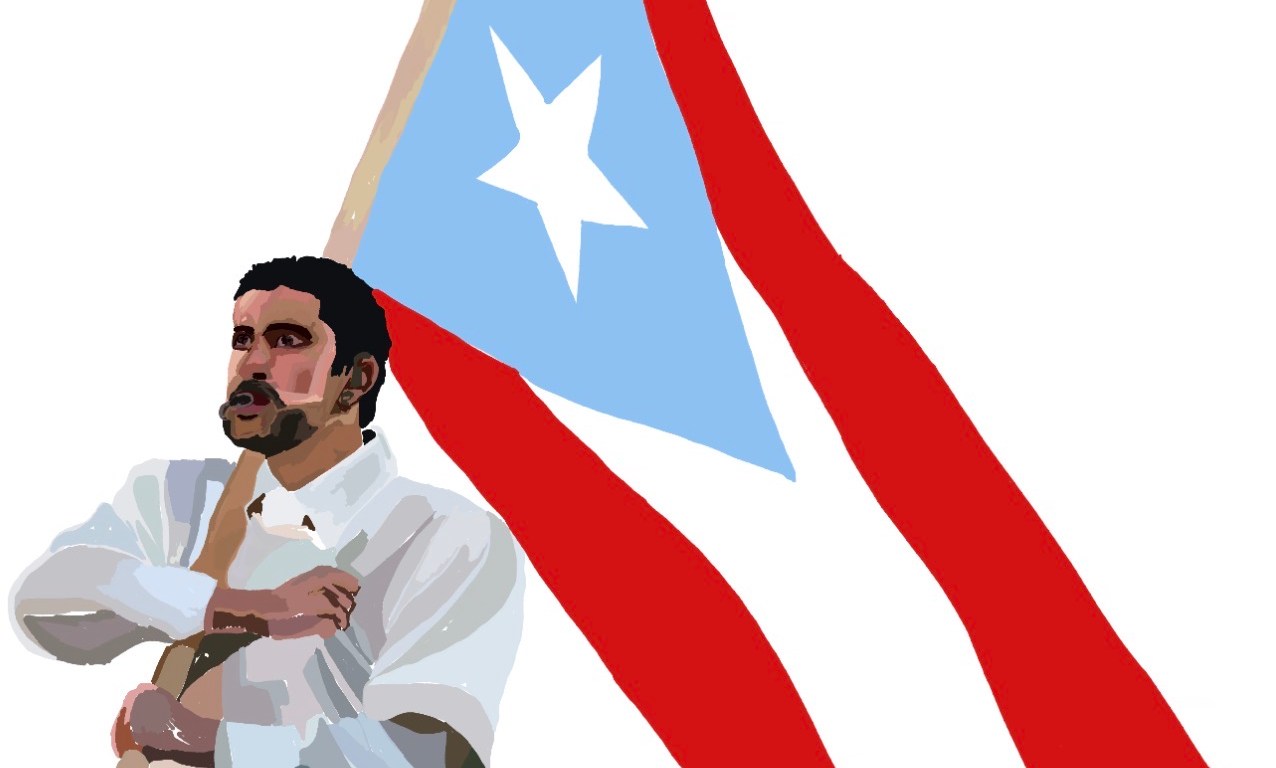
On Sunday, February 8, 2026, the “Big Game”, also known as the Super Bowl, took place at the Levi’s Stadium in Santa Clara, California, on the annual “Super Sunday”. Record-breaking Puerto Rican singer and rapper Bad Bunny, Benito Antonio Martinez Ocasio, performed the coveted thirteen minute halftime show. This year’s performance was heavily covered by media and took a strong political stance.
Just one week after making history by winning the Grammy for Album of the Year, and two others, for his sixth studio album “DeBÍ TiRAR MáS FOToS (DtMF)”, “I should have taken more photos”, Bad Bunny performed at the US’s most iconic venue. The tone of his performance was already announced in his politically engaged speech after winning at the Grammys marked by his “ICE out” urge. Many celebrities also wore pins with this message at the ceremony, showing their support for ICE victims such as Renee Good and Alex Pretti.
As Spotify’s first global artist in 2025 with over 19.8 billion streams, Bad Bunny was already familiar with making history. On Super Bowl Sunday, he used the thirteen minutes of his halftime show to deliver a strong political performance, full of denounciations. Amid heavy pressure and harsh treatment against immigrants and American citizens in the United States, especially by the Department of Homeland Security and the federal immigration police ICE, Bad Bunny made it clear that he was against the US government and its authoritarian treatment of people.
Bad Bunny’s outfit held deep symbolism: he wore a jersey with the number 64. This could be interpreted as both a personal homage to his late uncle, Cutito, born in 1964, who gave him love for sports, and an homage to the initially reported and undercounted 64 victims of Hurricane Maria, which occurred in Puerto Rico in 2017. The now-famous white plastic “monobloc” chairs featured on Bad Bunny’s album cover representing Puerto Rican culture and Bad Bunny’s childhood also had an important place on the Super Bowl stage.
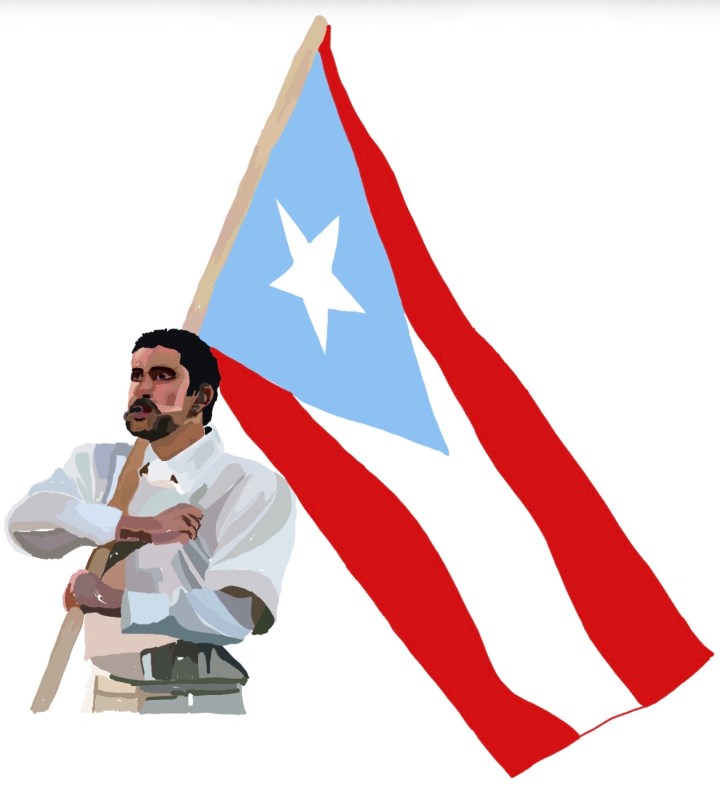
A great number of important symbols played a role in the interpretation of the show. While performing a song on Puerto Rican pride and the frustration of the frequent blackouts, Bad Bunny and his dancers were hanging from electric poles. Sugar cane fields also represented slavery in South American countries, and Bad Bunny performed several songs in a “Casita”, “little house” in Spanish, a traditional house from Puerto Rico.
The large screen behind Bad Bunny showed a strong message, reading : “The only thing more powerful than hate is love” in capital letters. It resonated with Bad Bunny’s identical words during his speech at the Grammys, where he added : “If we fight, we have to do it with love.”
Symbolically, Bad Bunny pronounced only sentence in English at the end of his performance : “God bless America”, a well-known formula known for being the title of an American patriotic song. He then enumerated most of America’s countries including the US, showing one again that America does not only designate the US. The many different flags of American countries also gave strong visibility to Latino communities. The enumeration finished with Puerto Rico, Bad Bunny’s, “motherland”, “mi patria” as he said in Spanish.
His set list included hits from his latest and older albums such as « Tití Me Preguntó », « EoO », « MONACO », « Die With a Smile » (featuring Lady Gaga), « BAILE INoLVIDABLE », « NUEVAYoL », « CAFé CON RON » and « DtMF”. Bad Bunny also invited Latino celebrity guests : Karol G, who also broke records with her album “Tropicoqueta” and its song celebrating Latina women called “LATINA FOREVA”, Jessica Alba, and Pedro Pascal. Other guests included Lady Gaga and Cardi B.
The 2026 Super Bowl beat a record of 4.157 global billion views in the first 24 hours. This occurred even though an alternative “American” Turning Point USA halftime show was organized by MAGA and Trump supporters, with American singer Kid Rock performing. Among the attendees were Donald Trump Junior and vice-president JD Vance. Despite a strong promotion of this “other” Super Bowl, it was not as popular as what was hoped, summing up under 6 million viewers on all streaming platforms. Additionally, Kid Rock’s controversial lyrics from his track “Cool, Daddy Cool”, released in 2001, which mention liking underage girls, resurfaced after his performance and were heavily denounced in the midst of the release of the Epstein files and the controversy about the president’s involvement.
Overall, this year’s halftime show was a highly attended performance carrying a strong political message denouncing the US government and its policies, while simultaneously celebrating Puerto Rican culture.
Valentina V.

